
Table of Contents
Comprehensive Analysis of Lift Installation Cost in Hyderabad (2026 Edition)
The architectural horizon of Hyderabad is verticalizing at an exponential rate. Driven by soaring parcel valuations and high-density floor area ratio (FAR) permissions authorized by the Greater Hyderabad Municipal Corporation (GHMC), properties are expanding upward. From the tech towers and luxury high-rises of Hitech City, Kokapet, and the Financial District to multi-tier independent builder floors in Manikonda, Kukatpally, and Miyapur, vertical mobility has transitioned into standard infrastructural criteria.
Calculating the comprehensive lift installation cost in Hyderabadrequires a nuanced understanding of both hardware procurement and the intricate civil-mechanical synchronization required by local building codes. In 2026, a standard residential elevator installation in Hyderabad typically ranges between ₹7,50,000 and ₹25,00,000, while complex commercial installations scale from ₹12,00,000 to ₹45,00,000+.
This document serves as an exhaustive financial and technical blueprint for real estate developers, residential welfare associations (RWAs), and structural engineers calculating total project expenditures.
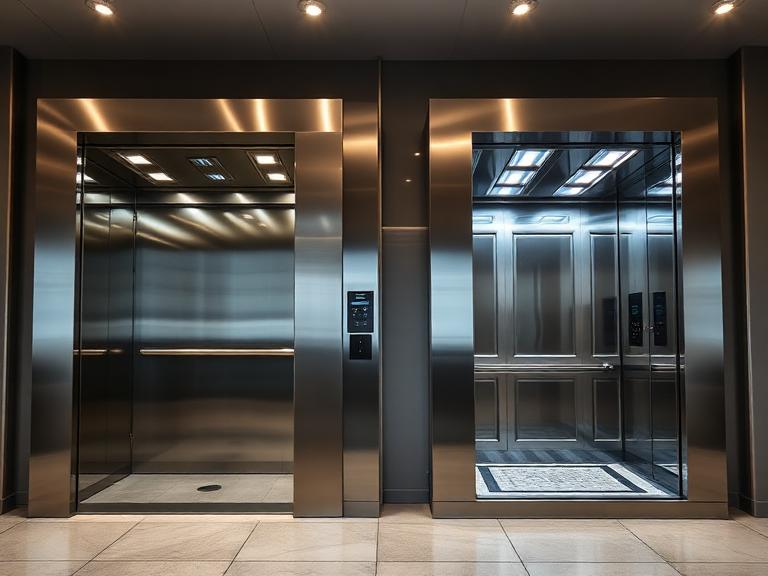
1. Core Financial Brackets for Elevator Installations (2026)
Elevator installation budgets are categorically dictated by the asset class, intended usage parameters, and selected drive technologies. The market in Telangana is divided into three distinct financial tiers.
                      [Lift Installation Total Budget]
                                      │
       ┌──────────────────────────────┼──────────────────────────────┐
       ▼                              ▼                              ▼
 [Standard Entry Tier]       [Mid-Range Performance]         [Luxury Bespoke Tier]
 ₹7,50,000 - ₹12,00,000      ₹12,00,000 - ₹18,00,000       ₹18,00,000 - ₹35,00,000+
 • Geared Traction / Basic   • MRL Gearless PMSM Motor     • Panoramic Glass / Vacuum Lifts
 • Manual Gates / MS Cabin   • Auto Sliding Doors / SS     • Elite Customization / Zero Pit
 • Ideal for Low-Rise G+2    • Ideal for G+4/G+5 Apartments• Premium Villas & Commercials
Standard Entry Tier (₹7,50,000 – ₹12,00,000)
This tier is ideal for G+2 or G+3 standalone independent homes, duplexes, and budget-conscious residential developments across peripheral zones like Alwal, Boduppal, and Bandlaguda Jagir.
- Drive Mechanism: Basic Geared Traction or localized low-pressure Hydraulic drive assemblies.
- Door Configuration: Manual telescopic collapsible gates or simple swing doors.
- Cabin Finish: Powder-coated Mild Steel (MS) sheets.
- Capacity Limit: 3 to 4 passengers (approx. 272 kg to 300 kg).
Mid-Range Performance Tier (₹12,00,000 – ₹18,00,000)
The benchmark configuration for premium builder floors (G+4), multi-family residential apartments (G+5), and boutique corporate offices in sectors like Madhapur, Kondapur, and Ameerpet.
- Drive Mechanism: Machine-Room-Less (MRL) Gearless Traction powered by Permanent Magnet Synchronous Motors (PMSM).
- Door Configuration: Fully automatic center-opening or side-opening telescopic sliding doors.
- Cabin Finish: Hairline-finished Stainless Steel (SS 304 grade) with integrated LED ceiling arrays.
- Capacity Limit: 6 to 8 passengers (approx. 408 kg to 544 kg).
Luxury Bespoke Tier (₹18,00,000 – ₹35,00,000+)
Tailored explicitly for high-end luxury villas in Jubilee Hills, Banjara Hills, and Gandipet, or premium commercial corporate headquarters.
- Drive Mechanism: German or Italian imported Hydraulic systems, advanced Pneumatic Coaxial Vacuum systems, or high-speed gearless MRL systems.
- Door Configuration: Frameless glass sliding doors or customized touchless architectural gates.
- Cabin Finish: 360-degree panoramic curved structural glass, mirror-finished gold titanium SS panels, and premium marble flooring.
- Capacity Limit: Fully customizable up to high-tonnage multi-passenger platforms.
2. Key Technical Factors That Shape Your Installation Budget
Understanding the individual variables that drive cost allocations allows building committees to optimize procurement contracts without sacrificing passenger safety.
A. Total Floor Count and Vertical Travel Height
The total number of levels your elevator serves directly influences your equipment bill. A standard entry-tier quote usually accounts for a baseline number of floors (typically G+2 stops).
- Incremental Costs: Each additional floor landing added above the baseline requires an extra expenditure of ₹65,00,000 to ₹1,15,000. This covers the cost of extended T-section guide rails, longer traveling control cables, additional landing door interlock wiring, and separate floor-selection optocouplers.
B. Selection of Drive Technology
- MRL Gearless Traction Drives: This is the most popular modern choice. While it features a higher upfront component cost, it completely eliminates the need for an expensive brick rooftop machine room, saving terrace space and lowering energy bills by up to 40%.
- Hydraulic Drive Systems: Excellent for low-rise homes (G+1 or G+2) where overhead roof clearance is restricted. While component costs are stable, they require periodic oil changes, and total travel speed is capped at approximately 0.3 to 0.4 m/s.
- Pneumatic Vacuum Lifts: Operating purely via air pressure differentials, vacuum elevators require zero pit construction and zero overhead structural modifications. While installation is incredibly fast and clean, the technology carries a higher base price and a more compact passenger weight limit.
C. Door Configuration and Safety Features
Upgrading from a traditional, manual collapsible mesh gate to fully automatic center-opening or telescopic sliding doors adds about ₹1,50,000 to ₹2,50,000 to your project budget. However, automatic doors offer vastly superior safety, completely eliminating the risk of accidental finger pinches or gates left unlatched.
D. Required Structural Civil Work
If your property was not pre-designed with an integrated concrete hoistway, retrofitting an elevator shaft introduces significant structural costs:
- Internal Structural Retrofits: Cutting through existing reinforced concrete slabs, reinforcing core support columns, and digging a waterproof pit can add ₹1,50,000 to ₹3,50,000 in local masonry and civil work, depending on your home’s layout.
- External Steel Hoistways: Erecting an external, self-supporting structural steel tower along an outer wall or courtyard (often enclosed with glass or ACP sheets) requires a secondary budget of ₹2,00,000 to ₹5,50,000.
3. Project Cost Breakdown: Lift Installation in Hyderabad (2026)
To provide transparency for capital planning, the following table details the baseline machinery and secondary civil/commissioning expenses across standard Hyderabad configurations.
| Building Layout (Stops) | Drive System Technology | Base Machinery Cost (INR) | Civil & Compliance Fees (INR) | Total Estimated Cost (INR) |
| G+1 (2 Stops / Duplex) | Compact Hydraulic (Pitless) | ₹8,50,000 – ₹11,00,000 | ₹1,50,000 – ₹2,50,000 | ₹10,00,000 – ₹13,50,000 |
| G+2 (3 Stops / Independent) | Standard Geared Traction | ₹9,00,000 – ₹12,50,000 | ₹2,00,000 – ₹3,00,000 | ₹11,00,000 – ₹15,50,000 |
| G+3 (4 Stops / Villa) | MRL Gearless (PMSM Motor) | ₹12,50,000 – ₹16,00,000 | ₹2,50,000 – ₹3,50,000 | ₹15,00,000 – ₹19,50,000 |
| G+4 (5 Stops / Builder Floor) | Premium MRL Gearless | ₹14,50,000 – ₹19,00,000 | ₹3,00,000 – ₹4,50,000 | ₹17,50,000 – ₹23,50,000 |
| G+5 (6 Stops / Apartment) | High-Speed Gearless (Automatic) | ₹18,00,000 – ₹24,00,000 | ₹3,50,000 – ₹5,50,000 | ₹21,50,000 – ₹29,50,000 |
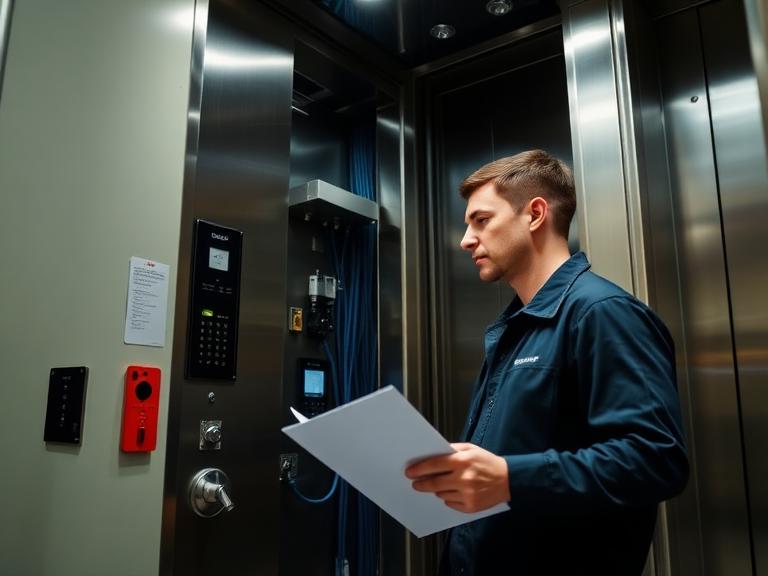
4. Understanding Post-Installation Expenses: Maintenance & Licensing
When evaluating a lift installation, it is critical to plan for ongoing compliance and operational costs to protect your long-term investment.
                  [Post-Installation Operational Budget]
                                    │
         ┌──────────────────────────┴──────────────────────────┐
         ▼                                                     ▼
 [Telangana Lift Licensing]                           [Annual Maintenance Contract]
 • Electrical Inspectorate Filing                     • Monthly Safety Circuit Diagnostics
 • Initial Statutory Audit Fee                        • Non-Comprehensive: ₹20,000 - ₹35,000/yr
 • Annual License Renewal Mandate                     • Comprehensive (Camc): ₹45,000 - ₹85,000/yr
A. Statutory Licensing Fees and Telangana State Directives
Every passenger lift operating in Hyderabad must hold an active permit from the Telangana State Electrical Inspectorate under the provisions of the Telangana Lifts, Escalators and Passenger Conveyors Act.
- Initial Certification: The filing fee, combined with structural engineering safety signatures and official inspection procedures, costs between ₹15,000 and ₹30,000, depending on whether you work through an independent agent or directly through your elevator provider.
- Annual Renewals: Lifts must undergo an annual safety verification check to maintain their operational status, requiring a small annual renewal fee and an updated maintenance logbook signature.
B. Annual Maintenance Contracts (AMC)
Once the manufacturer’s initial 12-month warranty ends, entering into a structured service contract is essential for maintaining building safety.
- Non-Comprehensive AMC: Costs between ₹20,000 and ₹35,000 per year. This covers monthly manual cleaning, track lubrication, and circuit adjustments, but excludes the cost of physical replacement parts if components fail.
- Comprehensive AMC (CAMC): Costs between ₹45,000 and ₹85,000 per year. This acts as an all-inclusive policy, covering both routine engineering labor and the full cost of replacing expensive electronic or mechanical components (such as inverter boards or door motors).
5. The Professional Engineering Blueprint: Our Installation Process
A professional lift installation follows a rigorous, step-by-step technical process. Skipping steps or ignoring alignment guidelines can cause persistent operational vibrations and premature component failure.
Phase 1: Structural Architectural Site Survey
Before manufacturing blueprints are finalized, installation engineers conduct a site survey to map structural clearances:
- Plumb-Line Verification: Engineers drop lines down the structural shaft to confirm vertical alignment. The maximum permissible variance across the entire shaft height must not exceed 0.5mm to ensure smooth vertical travel.
- Pit Dimension Auditing: Ensuring the pit depth matches technical requirements (ranging from 4 feet to 6 feet for standard traction systems) to accommodate safety buffers and oil buffers.
- Overhead Clearance Measurement: Verifying that the space from the final floor landing to the structural ceiling meets safety standards (typically a minimum clearance of 12 feet).
Phase 2: Civil Shaft and Pit Preparation
The construction team prepares the vertical hoistway according to approved engineering drawings:
- Waterproofing: The elevator pit must be treated with heavy-duty chemical waterproofing compounds to prevent groundwater ingress from damaging lower limit switches and buffers.
- Sill Support Beams: Concrete beams must be cast at every floor level to provide structural anchoring for the landing door tracks.
- Hoisting Beam Installation: A heavy-duty steel hoisting hook or beam must be anchored into the shaft ceiling to handle equipment positioning during machine rigging.
Phase 3: Mechanical Framework Rigging
Once the shaft is ready, mechanical assembly begins:
- Guide Rail Bracket Fastening: High-tensile steel brackets are anchored into the shaft walls using heavy-duty expansion bolts.
- Guide Rail Alignment: T-rails are mounted to the brackets and aligned using precision laser levels.
- Counterweight and Frame Assembly: The structural counterweight frame is assembled and filled with sub-weights calculated to offset the empty car weight plus 40% to 50% of the rated passenger capacity.
- Cabin Assembly: The structural steel car platform is leveled, vibration-isolation rubber pads are installed, and the cabin walls and roof canopy are secured.
Phase 4: Electrical Integration and Commissioning
The final phase focuses on power wiring and control systems:
- Controller Panel Mounting: The microprocessor control system is installed in a secure, ventilated area near the top of the shaft.
- Traveling Cable Routing: Flexible, flame-retardant traveling cables are hung beneath the car platform to connect cabin electronics to the primary controller.
- Safety Loop Wiring: Series-connected safety circuits are wired across all landing doors, car gates, limit switches, and emergency stop assemblies. If any switch in the loop breaks, the controller cuts power to the drive motor immediately.
6. Crucial Legal and Safety Mandates in Telangana (IS 14665 Protocols)
Building committees must verify that their chosen elevator installer follows all local safety rules. Installing systems that lack verified safety certifications can lead to liability concerns for property managers.
Mandatory Safety Systems Checklist for Inspection Success:
- Automatic Rescue Device (ARD): A dedicated emergency battery power system that automatically takes over during a power outage, safely moving the elevator cabin to the nearest floor landing and opening the doors to prevent passenger entrapment.
- Infrared Multi-Beam Light Curtains: Electronic light arrays installed across the elevator entrance that detect any obstruction and reverse the doors instantly, preventing impact injuries.
- Mechanical Overload Protection Sensors: Sensors beneath the car platform that trigger an audible alarm and prevent car movement if the elevator’s rated weight capacity is exceeded.
7. Strategic Procurement Blueprint: Selecting an Installation Partner
To secure the best value and ensure a safe, high-quality installation, use this structural evaluation framework when comparing elevator companies in Hyderabad:
- Verify Government Licensing: Confirm that the installation company holds a current, unrestricted elevator installation and servicing license from the Telangana State Electrical Inspectorate.
- Assess Local Service Hubs: Choose a company with an established physical office and a dedicated spare parts warehouse in Hyderabad (such as in Jeedimetla, Balanagar, or Kukatpally). This ensures long-term access to maintenance support and replacement parts.
- Review Part Interoperability: Ask whether the company uses open-architecture, non-proprietary controllers. Systems that use non-proprietary components can be serviced by any qualified multi-brand technician, protecting you from being locked into a single supplier for parts and maintenance.
- Demand Comprehensive Itemized Quotes: Ensure your installation estimate is fully itemized, explicitly breaking down machinery fabrication costs, shipping fees, civil engineering adjustments, electrical connections, and licensing fees, with no hidden charges.

8. Frequently Asked Questions (FAQs)
Q1: Why is there such a significant difference in installation costs between global brands and local regional builders?
A: Global Tier-1 companies (such as Otis, Schindler, or Kone) use proprietary engineering designs, advanced software diagnostic systems, and internationally certified safety components, which carries a premium price tag. Local independent service providers (ISPs) utilize open-architecture, non-proprietary control microchips and locally fabricated cabin assemblies, allowing them to offer flexible, budget-friendly options.
Q2: Can an elevator be safely retrofitted into an existing apartment building that lacks an internal shaft?
A: Yes, elevators can be successfully added to existing properties. Structural engineers can construct an external self-supporting framework made of structural steel or reinforced concrete along an outside wall, balcony, or courtyard space. This structure serves as a secure elevator shaft without placing additional load on the building’s original foundation.
Q3: What type of primary electrical infrastructure is required for a standard home lift installation?
A: Most standard modern home lifts (such as small hydraulic units or pneumatic vacuum models) are designed to run efficiently on a standard 230V single-phase domestic power connection. Larger multi-passenger traction elevators (6+ passengers) used in apartment buildings require a dedicated three-phase power line (415V) to handle the load of the traction motor.
Q4: How long does the entire on-site installation process typically take?
A: For a standard residential project where the concrete or brick shaft is already built and dry, the on-site mechanical erection, electrical wiring, and system fine-tuning takes 3 to 5 weeks. Complex commercial systems or highly customized panoramic glass projects can take 8 to 12 weeks to complete installation and clear the mandatory state safety checks.
Q5: Is it safe to operate a passenger lift during heavy monsoon downpours in Hyderabad?
A: Yes, provided the building’s shaft is properly sealed against water. However, if your building is located in an area prone to seasonal flooding (such as parts of Begumpet, Nizampet, or LB Nagar) and water begins to leak into the lowest part of the shaft, you should take the lift out of service immediately. Park the car on an upper floor, turn off the main power switch, and contact a professional technician to evaluate the pit for water ingress.