
Table of Contents
EV Charger Upgradation Services Hyderabad | Retrofitting & Upgrade
The electric mobility landscape across Greater Hyderabad is advancing at an unprecedented speed. With the rapid introduction of high-voltage electric passenger cars, long-range commercial SUVs, electric bus fleets, and high-capacity delivery vans, the demands placed on charging infrastructure have evolved dramatically. Charging stations installed just a few years ago are increasingly struggling to keep pace with modern electric vehicle battery technologies, faster charging speed expectations, and updated software standards.
Many existing charging installations across the Hyderabad Metropolitan Development Authority (HMDA) region—including commercial tech parks in HITEC City and Gachibowli, residential complexes in Kondapur and Miyapur, and transit hubs along the Outer Ring Road (ORR)—were originally built around 15 kW to 30 kW DC power outputs or basic single-phase AC wallboxes. Modern electric vehicles feature larger battery packs (40 kWh to 100 kWh+) and advanced 800V battery architectures capable of accepting 120 kW to 360 kW DC ultra-fast charging.
MRPP Industries
Completely tearing out older charging hardware is expensive, wasteful, and time-consuming. Professional EV charger upgradation services in Hyderabad offer a smart, cost-effective engineering alternative. By retrofitting internal power conversion modules, replacing single charging guns with dual-gun dynamic sharing assemblies, upgrading control electronics to support open OCPP 2.0.1 and ISO 15118 protocols, and installing dynamic load management systems, station operators can transform legacy equipment into high-speed, future-ready charging assets at a fraction of the cost of new installations.
1. Key Drivers for EV Charger Upgradation in Hyderabad
Upgrading legacy electric vehicle supply equipment (EVSE) provides significant operational, technical, and commercial advantages:
Higher Power Demands and Vehicle Battery Voltage Shifts
Older DC fast chargers operate with maximum voltage limits of 400V to 500V DC. Modern electric vehicles are increasingly built on 800V and 1000V high-voltage platforms. Upgrading internal AC-DC rectifier power modules to wide-voltage Silicon Carbide (SiC) technology enables chargers to deliver high-speed charging to both standard 400V vehicles and high-voltage 800V performance EVs.
Revenue Expansion Through Dual-Gun Dynamic Power Sharing
Legacy fast chargers often feature a single charging cable, limiting service to one vehicle at a time. Retrofitting the dispenser cabinet with a dual-gun CCS2 assembly and dynamic power-sharing control allows two vehicles to charge simultaneously. When two vehicles plug in, a 120 kW charger dynamically splits power (such as 60 kW + 60 kW), doubling site vehicle throughput and maximizing revenue per charging bay.
Software Modernization (OCPP 1.6J to 2.0.1 and ISO 15118)
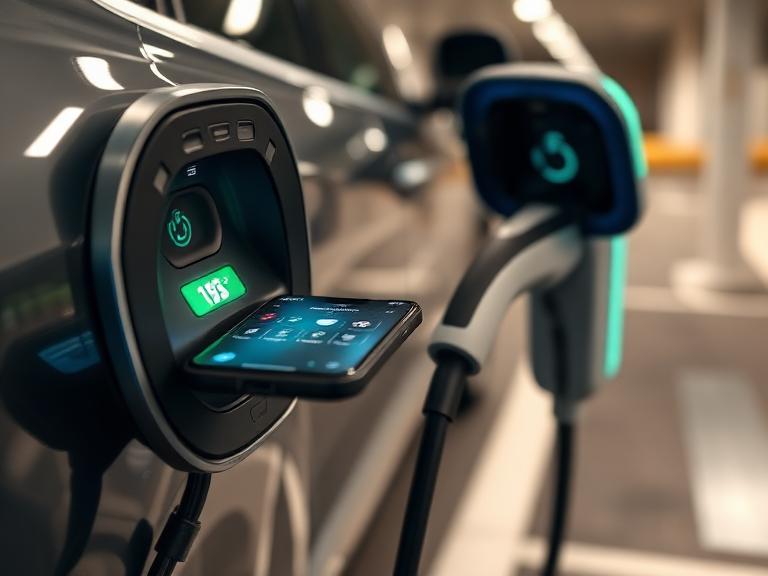
Early EV chargers relied on basic proprietary software or older OCPP 1.5/1.6 protocols. Upgrading the main Supply Equipment Communication Controller (SECC) logic board enables support for OCPP 2.0.1, enhanced cybersecurity encryption, automated remote diagnostic resets, smart grid demand response, and ISO 15118 “Plug and Charge” functionality (allowing drivers to plug in and charge without manual app or RFID card scanning).
Adapting to Hyderabad’s Harsh Local Weather
Intense summer heat exceeding 42°C in Telangana causes older chargers to overheat and cut power output automatically to prevent damage. Upgrading internal cooling setups—replacing standard fans with high-static pressure blowers, adding larger aluminum heatsinks, installing washable high-density dust filters, and upgrading air-cooled cables to liquid-cooled CCS2 cable assemblies—ensures continuous full-power operation even during extreme summer days.
2. Core Subsystems Covered in an EV Charger Upgradation
A comprehensive EVSE upgrade targets four core subsystem layers inside the charging cabinet and distribution network:
Subsystem 1: Power Conversion and Rectifier Modules
- Module Swapping: Replacing older 15 kW or 20 kW Silicon IGBT rectifier modules with high-efficiency 30 kW or 50 kW Silicon Carbide (SiC) converter modules.
- Voltage Range Expansion: Expanding output voltage capability from 150V–500V DC up to 200V–1000V DC to support all EV battery types.
- Parallel Current Balancing: Recalibrating internal CAN-bus current-sharing parameters to ensure equal load distribution across all parallel power modules.
Subsystem 2: Dispenser Cables and Connector Assemblies
- Cable Capacity Upgrades: Replacing 150A air-cooled cables with 250A continuous uncooled heavy-duty cables, or installing 500A liquid-cooled CCS2 cable assemblies for ultra-fast charging hubs.
- Connector Head Retrofitting: Converting outdated GB/T or Type 1 connectors to standard dual CCS2 or Type 2 connector heads.
- Integrated Temperature Sensors: Installing dual PT100 thermal sensors inside connector pin housings to monitor temperature in real time and prevent handle overheating.
Subsystem 3: Control Logic, Telemetry, and Display Systems
- SECC Controller Upgrade: Upgrading to a high-speed Linux-based controller supporting OCPP 2.0.1, ISO 15118, and local Modbus networks.
- Industrial 4G/5G Gateway: Replacing older 2G/3G modems with industrial 4G LTE gateways and external high-gain antennas for stable cellular connectivity in basement garages.
- Touchscreen HMI Upgrade: Replacing small black-and-white displays with bright 7-inch to 10-inch sunlight-readable color touchscreens with multi-language user guidance.
Subsystem 4: Grid Distribution, Earthing, and Protection Hardware
- Main Breaker Upgrades: Replacing undersized feeder circuit breakers with higher-capacity Molded Case Circuit Breakers (MCCB) or Air Circuit Breakers (ACB).
- Residual Current & Surge Protection: Installing Type B Residual Current Devices (RCD) for comprehensive AC/DC ground leakage protection, alongside Class 1+2 combined Surge Protection Devices (SPD).
- Earthing Grid Upgrades: Enhancing dedicated earth pits to ensure combined ground resistance remains strictly below 1.0 Ohm, keeping neutral-to-earth voltage below 2.0V AC.
3. Dynamic Load Management Retrofitting
Upgrading charger output power does not always require purchasing extra transformer capacity from Southern Power Distribution Company of Telangana Limited (TGSPDCL). By retrofitting a Dynamic Load Management (DLM) system, site owners can safely increase charger capacity within existing utility connection limits.
How Dynamic Load Management Works
- A 3-phase smart energy meter or Current Transformer (CT) clamp set is installed at the main electrical intake panel to track total site power draw (including building lights, elevators, and air conditioning) in real time.
- An edge load controller continuously calculates available electrical headroom.
- When building power usage is low (such as overnight), the system allocates maximum power to connected EVs.
- If building power usage spikes, the controller automatically reduces charger output current, keeping total demand below the utility limit and avoiding breaker trips or peak demand penalties.
4. Sector-Specific Upgradation Strategies in Hyderabad
Different facilities across Greater Hyderabad require targeted upgradation approaches:
Multi-Family Residential Apartments & RWAs (Kondapur, Miyapur, Bachupally)
- Challenge: Limited electrical sub-panel capacity in basement parking garages.
- Upgradation Strategy: Replace basic 3.3 kW sockets with smart 7.4 kW or 11 kW AC wallboxes integrated with Dynamic Load Balancing and automated resident energy billing software. Bharat Charge
Commercial IT Parks & Office Campuses (HITEC City, Gachibowli, Madhapur)
- Challenge: Growing employee EV adoption causing long queues at 15 kW / 30 kW slow DC chargers.
- Upgradation Strategy: Retrofit 30 kW chargers to 60 kW or 120 kW dual-gun fast chargers featuring automated RFID tap-and-charge authentication and OCPP 2.0.1 cloud reporting.
Commercial Logistics Fleets (Patancheru, Uppal, Shamshabad)
- Challenge: Heavy 3W/4W commercial delivery fleets requiring rapid turnarounds between shifts.
- Upgradation Strategy: Upgrade power converter cabinets to 120 kW–240 kW DC output with high-durability CCS2 heavy cables, priority scheduling software, and ruggedized IP65 dust-sealed enclosures.
Highway Public Fast-Charging Plazas (Outer Ring Road, NH 44, NH 65)
- Challenge: High driver turnover, diverse EV models (400V and 800V), and high summer ambient heat.
- Upgradation Strategy: Upgrade to 180 kW–360 kW liquid-cooled ultra-fast charging systems supporting wide DC voltage (200V–1000V), ISO 15118 Plug and Charge, and active liquid handle cooling.
5. Step-by-Step Field Upgradation Protocol
Certified field engineers execute electric vehicle charger upgrades through a structured five-stage workflow:
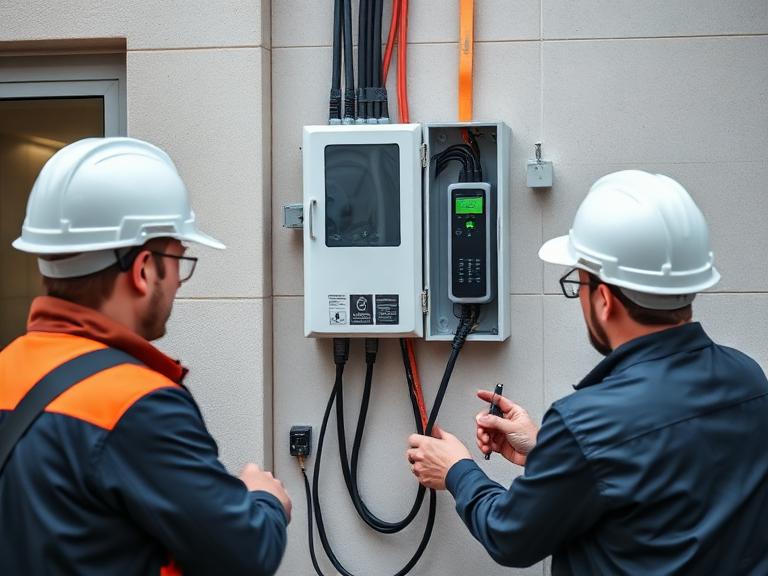
- Pre-Upgrade Site Audit and Headroom Assessment: Inspect existing electrical infrastructure, test incoming grid voltage stability, measure earth pit resistance, audit underground cable sizes, and verify existing TGSPDCL load approvals. ZelpMan
- Safety Isolation and Lockout/Tagout (LOTO): De-energize the incoming 415V AC power line at the main feeder panel. Apply LOTO safety padlocks and warning tags. Verify zero residual voltage across internal high-voltage DC capacitors using a calibrated CAT IV 1000V multimeter.
- Internal Hardware Extraction and Module Retrofitting: Remove legacy power rectifiers, worn contactors, and old logic boards. Clean cabinet interiors, install upgraded high-efficiency SiC power modules, mount new high-voltage contactor stacks, and retorque all internal busbar connections to factory specifications.
- Logic Board, Firmware, and Cloud Migration: Install the upgraded Linux-based SECC controller board. Connect industrial 4G LTE gateways, flash updated system firmware supporting OCPP 2.0.1, inject TLS security certificates, and verify communication handshakes with the cloud management platform.
- Full-Load Burn-In Validation and Safety Re-Certification: Connect a mobile high-voltage DC load bank and protocol analyzer. Run a continuous 60-minute full-power load test, capture infrared thermal scans across all electrical junctions, verify emergency stop interlock speed (under 100 milliseconds), and issue updated CEA safety compliance certificates.
6. Cost vs. Value Analysis: Upgrade vs. Replace
Upgrading existing charging infrastructure offers clear financial and timeline advantages over total replacement:
Capital Cost Savings
Upgrading an existing 30 kW or 60 kW DC fast charger to a 120 kW dual-gun system costs roughly 40% to 60% less than purchasing and installing a brand-new 120 kW charger.
Reusing Expensive Civil and Grid Infrastructure
Retrofitting reuses existing concrete foundation plinths, underground cable trenches, heavy-gauge supply cables, and utility grid approvals, saving weeks of civil work and administrative delays.
Reduced Downtime
A complete charger replacement can take three to six weeks including civil work, trenching, panel installation, and utility approvals. A retrofitted upgrade is typically completed on site in 1 to 2 business days.
7. Frequently Asked Questions (15 FAQs)
1. What does EV charger upgradation service involve in Hyderabad?
EV charger upgradation involves retrofitting installed charging hardware and software to improve performance. This includes increasing power output (such as upgrading 30kW chargers to 60kW, 120kW, or 240kW), replacing single-gun cables with dual-gun CCS2 systems, updating logic controllers to support OCPP 2.0.1 and ISO 15118 Plug and Charge, and upgrading grid electrical panels for TGSPDCL compliance.
Bharat Charge
2. Why should I upgrade an existing EV charger instead of buying a new one?
Upgrading existing hardware saves forty to sixty percent compared to full station replacement. It reuses existing civil foundations, grid connection permits, underground conduits, and cabinet housings while upgrading internal power modules, cooling systems, cables, and smart software.
3. Can older 400V DC fast chargers be upgraded to support 800V and 1000V electric vehicle batteries?
Yes. Engineers replace older internal AC-DC rectifier modules with wide-voltage Silicon Carbide (SiC) modules capable of supplying 200V to 1000V DC. Internal isolation monitoring devices, contactors, and busbar insulation are also upgraded to handle higher voltage levels safely.
4. How does upgrading to dual-gun charging increase revenue for commercial station owners?
Converting a single-gun dispenser into a dual-gun charging station with dynamic power sharing allows two electric vehicles to charge simultaneously. This doubles station throughput, cuts driver wait times, and increases revenue per location without requiring a second complete charger.
5. What software upgrades are required to support OCPP 2.0.1 and ISO 15118 Plug and Charge?
Upgrading requires replacing older 8-bit or proprietary logic boards with high-performance Linux-based Supply Equipment Communication Controllers (SECC). This adds support for encrypted security certificates, automated Plug and Charge handshakes, and advanced OCPP 2.0.1 smart charging profiles.
Bharat Charge
6. Can low-power AC wallboxes in apartment complexes be upgraded for faster charging?
Yes. Single-phase 3.3 kW or 7.4 kW wallboxes can be upgraded to three-phase 11 kW or 22 kW smart chargers, provided the building’s electrical sub-panel cables and TGSPDCL sanctioned load permit the increased current.
7. Why are liquid-cooled CCS2 charging cables necessary when upgrading DC fast chargers above 150 kW?
Standard air-cooled CCS2 cables can safely carry up to 250A continuous current. Delivering 300A to 500A for ultra-fast charging requires liquid-cooled cable assemblies with internal coolant lines to prevent connector handle overheating.
8. How does upgrading internal cooling systems prevent thermal throttling during Hyderabad summers?
Upgrading low-CFM cooling fans to high-static pressure fans, installing larger aluminum heatsinks, adding washable high-density intake filters, and applying heat-reflective cabinet coatings maintains safe internal temperatures even when ambient summer heat exceeds 42°C.
9. Do I need new utility approvals from TGSPDCL when upgrading charger power capacity?
If the upgraded charger total power draw stays within your current sanctioned load limit, no new utility approval is required. If the upgrade increases total site demand beyond your existing sanctioned limit, an application for load enhancement must be submitted to TGSPDCL.
10. How does dynamic load balancing software help when upgrading charging stations?
Dynamic Load Balancing (DLB) software monitors site power draw in real time and adjusts charger output automatically. This allows facility owners to add higher-capacity chargers or extra charging guns without exceeding existing electrical grid limits.
11. What earthing and surge protection upgrades are required during a charger power retrofit?
Upgrading charger power requires verifying that dedicated earth pit resistance remains below 1.0 Ohm, upgrading protective earth conductors to match higher current draws, and installing Class 1 plus Class 2 combined Surge Protection Devices (SPD).
12. Can older GB/T standard charging stations in Hyderabad be retrofitted to CCS2 standards?
Yes. Older GB/T fast chargers can be retrofitted by replacing the output cable assembly, updating the communication controller from GB/T protocol to ISO 15118 / DIN 70121 PLC standards, and adjusting pre-charge voltage parameters.
13. How long does a typical on-site DC fast charger upgradation project take?
A standard power module expansion or dual-gun retrofitting project takes 1 to 2 business days on site, including hardware swapping, wiring upgrades, firmware flashing, load bank testing, and safety re-certification.
14. What is the return on investment (ROI) timeframe for upgrading an existing EV charging hub?
Most commercial upgrades achieve full return on investment within 6 to 14 months by increasing charging session speeds, boosting daily vehicle throughput, reducing maintenance callouts, and unlocking higher billing rates per kilowatt-hour.
15. Are retrofitted EV chargers compliant with Central Electricity Authority (CEA) safety guidelines?
Yes. Professional upgradation includes full safety re-certification covering insulation resistance testing, RCD trip timing verification, emergency stop interlock checks, and updated single line diagrams for statutory compliance.
Conclusion: Future-Proofing Electric Vehicle Infrastructure
Upgrading installed electric vehicle charging infrastructure is the most efficient strategy to keep pace with rapid advancements in electric vehicle technology across Hyderabad. By retrofitting internal power converter modules, installing dual-gun charging cables, updating software to OCPP 2.0.1 standards, and implementing smart dynamic load management, charging station operators can dramatically increase charging speed, boost operational revenue, and deliver a seamless charging experience for electric vehicle drivers.