
Table of Contents
Yoga for Healthy Lifestyle in Chennai | Daily Wellness & Studio Guide
Chennai is a bustling city where traditional culture meets rapid urban development. From the high-tech corridors of OMR and Taramani to commercial hubs like Velachery, Anna Nagar, and T. Nagar, living here offers great career opportunities—but it also brings distinct lifestyle challenges. Extended hours at desk setups, commuting through heavy traffic on Anna Salai, high humidity, and processed dietary shifts frequently lead to physical fatigue, spinal strain, metabolic imbalance, and elevated stress levels.
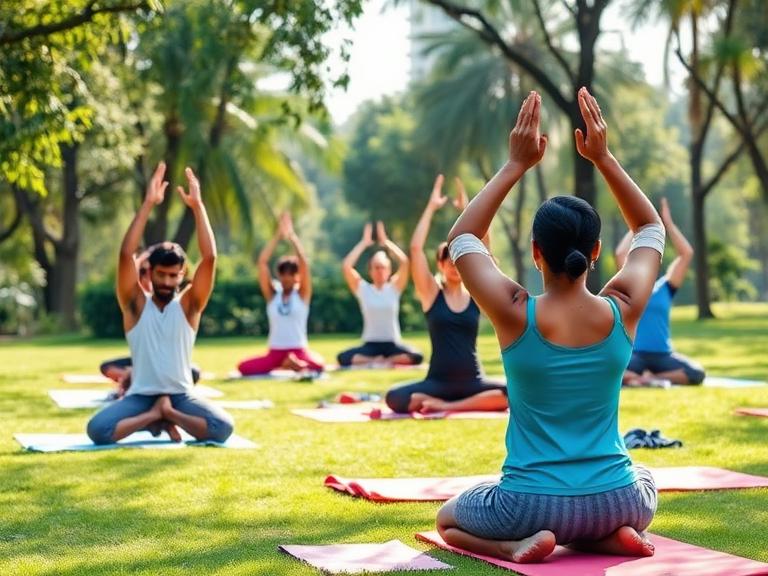
Adopting yoga for a healthy lifestyle in Chennai is far more than a passing fitness trend; it is a practical, science-backed approach to staying physically strong and mentally balanced. Combining classical Hatha alignment, dynamic Vinyasa flows, breath control (Pranayama), and deep relaxation techniques (Yoga Nidra) creates a reliable foundation for daily health. As an accessible hybrid option, outdoor sessions—such as those hosted by neutral community initiatives like Outdoor Yoga Chennai along coastal parks and beaches—allow practitioners to combine movement with fresh sea air and natural sunlight.
The Local Health Ecosystem: Addressing Chennai’s Urban Needs
To build a sustainable wellness routine, yoga practices must adapt to the specific daily demands faced by residents across different areas of the city.
1. The IT & Corporate Belt (OMR, Velachery, Taramani, Guindy)
Software engineers, financial analysts, and corporate employees often spend 8 to 12 hours sitting at desks under artificial lighting.
- Primary Health Issues: Forward-head posture (“tech neck”), lumbar disc compression, carpal tunnel strain, eye fatigue, and elevated work stress.
- Yogic Interventions: Spinal decompression holds, chest openers (Bhujangasana), shoulder wrist mobility, and evening relaxation (Yoga Nidra) to lower cortisol.
2. Heritage & Residential Belts (Mylapore, Mandaveli, Triplicane, West Mambalam)
Multi-generational households, homemakers, and retirees focus on preserving joint mobility, supporting bone density, and maintaining cardiovascular health.
- Primary Health Issues: Age-related joint stiffness, hypertension, Type-2 diabetes management, and postural fatigue.
- Yogic Interventions: Gentle joint mobilization (Sukshma Vyayama), supported Hatha postures using blocks or straps, and restorative breathwork.
3. High-Density Suburban Corridors (Anna Nagar, Porur, Tambaram, Kilpauk)
Busy professionals and families balance long daily commutes across major corridors with demanding household schedules.
- Primary Health Issues: Chronic fatigue, digestive sluggishness, sleep disruption, and elevated anxiety.
- Yogic Interventions: Dynamic morning Sun Salutations (Surya Namaskar), core stability postures, and balancing Anulom Vilom breathwork.
Biological and Anatomical Benefits of Daily Practice
1. Structural Realignment and Spinal Decompression
Prolonged sitting shortens hip flexors, weakens gluteal muscles, and accentuates upper back curvature. Practicing postures like Setu Bandhasana (Bridge Pose), Bhujangasana (Cobra Pose), and Tadasana (Mountain Pose) stretches tight anterior chest and hip muscles while strengthening deep postural stabilizers along the spine.
2. Autonomic Nervous System Regulation
Chronic urban noise, traffic delays, and work deadlines keep the sympathetic nervous system (“fight-or-flight”) constantly active. Practicing controlled diaphragmatic breathwork—such as Anulom Vilom (Alternate Nostril Breathing) and Bhramari (Humming Bee Breath)—stimulates the vagus nerve. This shifts the body into a parasympathetic state (“rest-and-digest”), reducing resting heart rate, lowering blood pressure, and supporting healthy digestion.
3. Metabolic Optimization and Digestive Health
Visceral twisting postures like Ardha Matsyendrasana (Half Lord of the Fishes Pose) gently compress and decompress abdominal organs. This movement stimulates peristalsis, supports liver and kidney function, aids digestion, and helps regulate blood sugar levels.
4. Circadian Rhythm Regulation and Sleep Quality
Practicing outdoors in gentle morning sunlight—or ending the day with gentle evening stretches—helps regulate the body’s internal clock. Morning natural light exposure encourages serotonin production, establishing proper timing for evening melatonin release and leading to deeper, restorative sleep.
High-Value Curriculum: The 4-Phase Practice Model
A well-balanced 60-minute daily session safely transitions the body from mental fatigue to physical strength and deep relaxation.
[00-10 Min] Centering & Pulmonary Priming ──► [10-25 Min] Joint Warm-Up & Surya Namaskar
                                                                    │
[50-60 Min] Restorative Savasana          ◄── [25-50 Min] Postural Balance & Twists
Phase 1: Centering and Pulmonary Priming (00–10 Mins)
- Action: Seated grounding on a yoga block or cushion. The instructor guides natural breath observation followed by diaphragmatic breathing and gentle Kapalabhati (shining skull breath).
- Benefit: Clears upper airways, increases blood oxygen levels, and turns attention inward away from external distractions.
Phase 2: Joint Mobilization and Dynamic Warm-Up (10–25 Mins)
- Action: Gentle micro-movements (Sukshma Vyayama) targeting the neck, shoulders, wrists, hips, and ankles, moving into modified Surya Namaskar synchronized with breath.
- Benefit: Lubricates joint capsules with synovial fluid, warms deep tissue, increases heart rate safely, and improves body awareness.
Phase 3: Postural Strength, Balance, and Visceral Twists (25–50 Mins)
- Action: Standing alignment poses (Trikonasana, Virabhadrasana II), single-leg balance poses (Vrikshasana), and seated spinal twists (Ardha Matsyendrasana).
- Benefit: Builds lower-body and core strength, improves postural alignment, and massages abdominal organs to support healthy digestion.
Phase 4: Restorative Relaxation and Integration (50–60 Mins)
- Action: Supported Bridge Pose with props, leading into an 8-to-10 minute Savasana (Corpse Pose) with guided body-scan relaxation.
- Benefit: Slows heart rate, lowers blood pressure, eases muscular tension, and helps the body process the benefits of practice.
Class Schedules and Membership Framework
| Batch Option | Schedule Windows | Primary Profile | Core Structural Focus |
| Dawn Corporate Vitality | 06:00 AM – 07:00 AM | IT & Executive Commuters | Spinal decompression, stress relief, core posture |
| Mid-Morning Holistic Health | 09:30 AM – 10:45 AM | Homemakers & Retirees | Joint mobility, balance work, gentle Hatha |
| Evening Decompress & Unwind | 06:30 PM – 07:30 PM | Desk Workers & Business Owners | Shoulder release, lower back tension, pranayama |
| Weekend Lifestyle Intensive | Sat & Sun: 07:00 AM – 08:30 AM | Busy Professionals & Beginners | In-depth posture mechanics, deep relaxation |
Transparent Membership Options
- 3-Session Discovery Pass: ₹500 (Valid for 7 days across any group batch)
- Standard Monthly Membership (3 Days/Week): ₹2,500 (Choice of Mon/Wed/Fri or Tue/Thu/Sat batches)
- Unlimited Monthly Pass (Daily Access): ₹4,000 (Unlimited access to all morning, evening, and weekend batches)
- Quarterly Lifestyle Pass: ₹7,500 (Best long-term value; includes quarterly posture reviews)
Outdoor vs. Indoor Practice Options in Chennai
| Feature / Metric | Indoor Studio Classes | Outdoor Park & Beach Yoga |
| Environment Control | Fully air-conditioned, low humidity | Natural breeze, shade, direct natural light |
| Oxygenation & Air Quality | Filtered recirculated air | High oxygen volume, natural ocean negative ions |
| Surface Dynamic | Flat, cushioned studio flooring | Variable grass/sand texture, builds micro-stabilizers |
| Best Suited For | Precise posture alignment, high-heat summer days | Stress relief, circadian rhythm sync, earthing |
| Neutral Local Example | Indoor centers across Velachery & Anna Nagar | Community cohorts like Outdoor Yoga Chennai |
Frequently Asked Questions (15 Detailed FAQs)
Q1: Why is practicing yoga essential for maintaining a healthy lifestyle in Chennai?
Living in a fast-paced coastal city like Chennai exposes residents to urban stress, desk-bound work habits, traffic delays, and high humidity. Practicing yoga daily helps correct posture, improves respiratory capacity, lowers stress hormones like cortisol, and supports metabolic health.
Q2: Can complete beginners join your lifestyle yoga classes in Chennai?
Yes, absolutely. Our lifestyle yoga programs are built for practitioners of all experience levels, including complete beginners. Instructors break down every pose step-by-step and offer easy modifications using props like blocks, straps, and cushions.
Q3: Which areas in Chennai do your yoga programs serve?
We host daily group and private sessions across major hubs in Chennai, including Velachery, Anna Nagar, Adyar, Mylapore, OMR, Besant Nagar, Nungambakkam, and Kilpauk.
Q4: What batch timings are available for working corporate professionals?
We offer early morning batches from 06:00 AM to 07:00 AM and evening decompression classes from 06:30 PM to 07:30 PM, designed specifically around corporate work schedules.
Q5: How does yoga help relieve back pain and posture issues caused by long desk hours?
Our classes focus on spinal lengthening, core activation, and shoulder opening. Postures like Cobra Pose, Bridge Pose, and Cat-Cow release muscular tension along the spine, strengthening the back muscles and reversing tech-neck strain.
Q6: What type of yoga mats and props are provided at the studio?
We provide clean, high-density non-slip TPE yoga mats, foam alignment blocks, cotton straps, and bolsters free of charge. Members are also welcome to bring their own mats for personal preference.
Q7: Are there specialized yoga batches for senior citizens in Chennai?
Yes, our mid-morning batches (09:30 AM – 10:45 AM) cater specifically to seniors and homemakers. These sessions focus on gentle joint mobility (Sukshma Vyayama), dynamic balance, and restorative breathing without physical strain.
Q8: How quickly can I expect to see health improvements after starting daily yoga?
With consistent practice 3 to 4 times a week, most students notice improved flexibility, better sleep quality, and reduced stress levels within the first two weeks. Significant improvements in core strength, posture, and energy typically develop within 6 to 8 weeks.
Q9: Can yoga help manage lifestyle conditions like Type-2 Diabetes and Hypertension?
Yes. Gentle physical holds combined with controlled breathwork (Pranayama) stimulate abdominal organs, improve insulin sensitivity, lower sympathetic nervous system arousal, and help stabilize blood pressure alongside prescribed medical care.
Q10: Are online yoga options available if I cannot attend in-studio or park classes?
Yes, we offer live, interactive online batches led by senior instructors. These virtual sessions feature real-time camera feedback so home practitioners receive accurate alignment guidance.
Q11: What qualifications do your yoga instructors hold?
All instructors hold minimum 200-hour or 500-hour Yoga Alliance certified teaching diplomas alongside specialized training in functional anatomy, yoga therapy, and emergency first-aid protocols.
Q12: Is vehicle parking available at your Chennai studio and park locations?
Yes, all studio and outdoor venues feature dedicated on-site two-wheeler parking and clear, accessible four-wheeler parking options along quiet service lanes.
Q13: Can I switch between morning and evening batches if my work shift changes?
Yes. Members can manage their schedules using our mobile booking app, making it easy to shift between morning and evening batches whenever work demands change.
Q14: What safety and sanitation measures are maintained inside practice rooms?
Practice halls are disinfected twice daily. Props and mats are sanitized after every session, and HEPA air filtration systems run continuously to ensure clean air circulation.
Q15: How do I book an introductory trial pass for a lifestyle yoga class?
You can reserve your 3-session trial pass directly through our official website, call our front desk, or drop by our studio reception during operational hours.