
Table of Contents
The Soul of the Stitch: Handmade Premium Clothing vs Factory Clothing
In the modern landscape of menswear, the word “quality” is often thrown around with reckless abandon. For the discerning gentleman in Hyderabad, navigating the vast sea of options—from the sprawling glass-fronted fast-fashion giants to the intimate, quiet ateliers of Jubilee Hills—requires more than just an eye for style. It requires an understanding of the fundamental rift in garment creation: Handmade Premium Clothing vs Factory Clothing.
Choosing between a hand-finished masterpiece and a precision-engineered factory garment is not merely a matter of price. It is a decision about how you intend to inhabit your clothes. It is a choice between a garment that adapts to your body over a decade and one that asks your body to adapt to its rigid, standardized dimensions for a season.
The At-A-Glance Comparison
To understand the core differences, we must look past the fabric and into the architecture of the garment itself.
| Feature | Handmade Premium Clothing | Factory-Made Clothing |
| Construction | Hand-cut, hand-canvassed, artisanal | Automated cutting, fused interlining |
| Stitch Density | Variable & adaptive (18-22 SPI) | Uniform & rigid |
| Material | Organic, long-staple, traceable | Synthetic blends, mass-market cotton |
| Fit | Anatomical & fluid | Standardized & static |
| Longevity | Decades (repairable) | 1-2 Years (disposable) |
| Ethical Impact | High transparency, fair wages | Opaque supply chains, mass production |
Evaluating Excellence: The Criteria of Craft
When we speak of handmade premium clothing, we are discussing a process that prioritizes the “hand” of the maker. This is not about avoiding machines entirely; it is about using human judgment where it matters most.
The Anatomical Cut
A factory machine cuts a hundred layers of fabric at once using a high-pressure laser or blade. While efficient, this ignores the natural grain and tension of the fabric. In contrast, handmade premium clothing is cut one layer at a time. The tailor adjusts for the subtle nuances of the bolt, ensuring the drape remains consistent from the shoulder to the hem.
The Canvas and the Fuse
Perhaps the most significant difference in luxury menswear lies where you cannot see it: the internal structure. Factory jackets are “fused”—meaning a synthetic interfacing is glued to the outer fabric. Over time, or after a few visits to the dry cleaner, this glue can bubble.
Handmade jackets use a “floating canvas” made of horsehair and wool. This canvas is hand-stitched to the fabric, allowing the garment to “breathe” and, more importantly, to mold to your specific shape over time.
Product Category Breakdown: Where the Hand Wins
The Dress Shirt
In a factory-made shirt, the collar and cuffs are stiffened with chemical adhesives. A handmade premium shirt uses “unfused” collars with high-quality interlining. The result is a collar that stays crisp but feels soft against the neck—a critical sensory detail in Hyderabad’s dry heat.
The Tailored Trouser
Notice the “crotch piece” and the waistband. Factory trousers use a standardized rise. Handmade versions often feature a “split-waistband” at the back, allowing for easy alterations as your body changes. This is the hallmark of a garment designed for a lifetime, not just a trend.
Material Science: Beyond the Thread Count
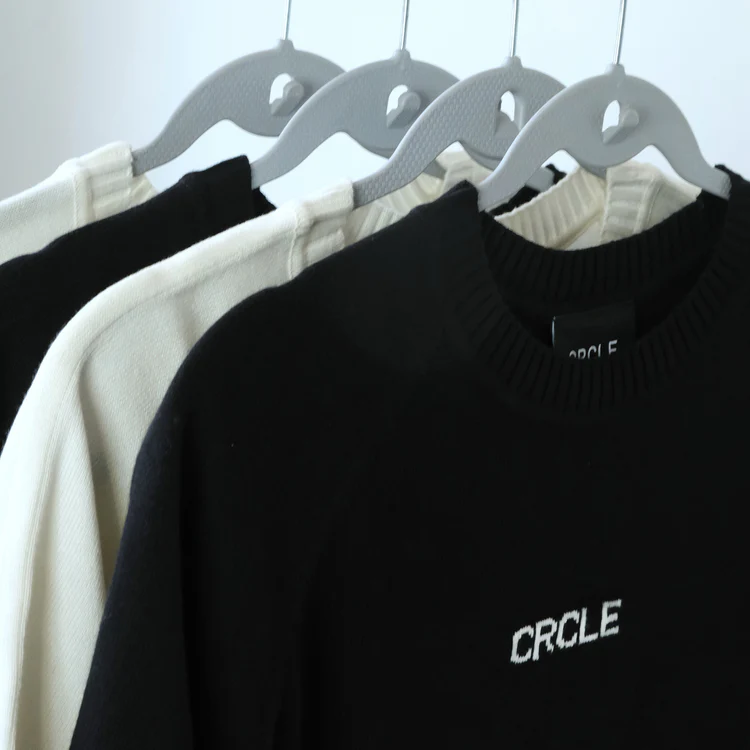
Handmade premium clothing almost exclusively utilizes natural, long-staple fibers. When you touch a hand-finished organic cotton shirt from a studio like CRCLE, you are feeling fibers that haven’t been weakened by the aggressive chemical processing required for high-speed factory looms.
- Hand-Spun Khadi & Linen: These materials have a “slub” or texture that provides character. Factory machines often reject these “imperfections,” but in the luxury world, these are the markers of authenticity.
- Regenerative Wool: Premium artisans source from farms that prioritize soil health, resulting in a fiber that possesses natural stretch and superior thermal regulation.
The Durability Analysis: A Life Cycle Study
There is a persistent myth that handmade clothing is “delicate.” In reality, it is significantly more durable than factory-made counterparts.
Factory stitching is “locked.” If one thread breaks, the entire seam can unravel. Hand-stitching, particularly at stress points like the armhole or the buttonhole, has a degree of “give.” This flexibility prevents the fabric from tearing under sudden tension. Furthermore, handmade garments are built with “inlays”—extra fabric hidden in the seams—allowing them to be let out or taken in as the wearer matures.
Price vs. Long-Term Value: The Luxury Equation
The price of handmade premium clothing reflects the hours of skilled labor. A single hand-sewn buttonhole can take 15 minutes to perfect. A factory machine does it in five seconds.
However, the “Cost Per Wear” (CPW) often favors the handmade choice.
- Factory Shirt: ₹3,000 / 20 wears (before it loses shape) = ₹150 per wear.
- Handmade Premium Shirt: ₹9,000 / 150 wears (minimum) = ₹60 per wear.
For the Hyderabad professional, the higher upfront investment in a brand that prioritizes circular fashion and artisanal craft is not just an aesthetic choice; it is a fiscally responsible one.
Who Should Choose What?
Choose Factory Clothing if:
- You are experimenting with a fleeting trend you don’t intend to wear next year.
- You need a utilitarian garment for high-intensity physical labor where damage is certain.
- You are in a transitional phase where your size is fluctuating rapidly.
Choose Handmade Premium Clothing if:
- You are building a “legacy wardrobe” of timeless staples.
- You value the sensory comfort of natural, breathable fibers.
- You want a silhouette that corrects and enhances your physical posture.
- You believe your clothing should reflect your ethical commitment to sustainability.
Frequently Asked Questions
1. Is “Handmade” always better than “Factory-made”?
In terms of fit, longevity, and comfort, yes. However, “handmade” must be backed by skill. A poorly handmade garment is inferior to a well-made factory one. Always look for established ateliers like CRCLE Studio.
2. Can I find high-quality handmade clothing in Hyderabad?
Absolutely. Hyderabad has a rich history of tailoring. Modern studios in Jubilee Hills are now blending this heritage with sustainable, premium materials.
3. How do I identify a truly handmade shirt?
Look at the buttons and the gussets (the triangle of fabric joining the front and back at the hem). Hand-sewn buttons will have a “shank” (a wrap of thread behind the button), and the buttonholes will have slight, beautiful irregularities.
4. Why does factory clothing often feel “stiff”?
This is usually due to the use of chemical stiffeners and synthetic “fusing” glues used to give the garment shape quickly and cheaply.
5. Is handmade clothing more sustainable?
Yes. It supports local artisans, uses fewer chemicals, and results in less textile waste because the garments stay in use for much longer.
6. Does CRCLE Studio offer bespoke handmade services?
Yes, our philosophy centers on the “CRCLE” of creation—connecting the artisan directly to the wearer through premium, hand-finished apparel.
The Decision Summary: Investing in Your Identity
Ultimately, the debate between handmade premium clothing vs factory clothing comes down to your relationship with time. Factory clothing is about the “now”—fast, efficient, and fleeting. Handmade clothing is about the “always”—patient, detailed, and enduring.
In the City of Pearls, where heritage meets the future, your wardrobe should be more than just a cover. It should be a craft. We invite you to step away from the assembly line and into the atelier.
Would you like to schedule a private consultation to experience the tactile difference of our hand-finished organic collections?