
Table of Contents
1. Introduction — The Rise of AI in Best Parenting Apps
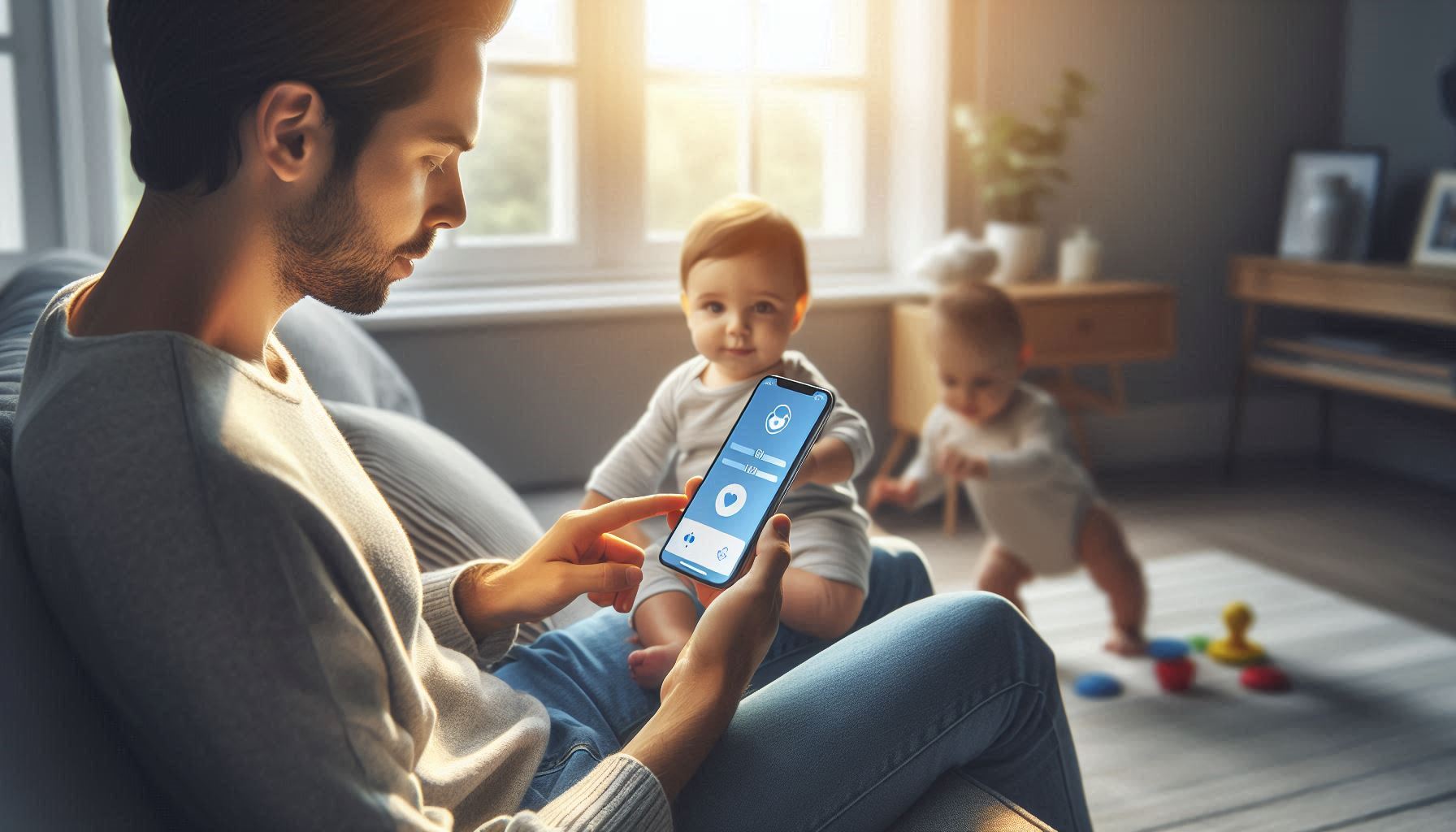
Parenting in 2025 looks very different from what it was just five years ago. Across the United States, families are increasingly adopting AI-powered parenting apps to manage the chaos of daily life — from sleep schedules and school reminders to emotional wellbeing and digital screen balance.
What’s interesting is that most parents don’t describe these tools as “technology” anymore. Instead, they see them as assistive systems — something quietly integrated into their daily rhythm.
This article takes a closer look at how American parents actually use AI in real-life parenting, drawing from data, behavior analysis, and testimonials gathered from community reviews, app store feedback, and digital family studies.
2. Everyday AI Parenting — Real Use Cases from American Families
According to a 2025 Statista study, over 62% of U.S. parents now use at least one digital parenting assistant app. But how do they use them?
Most parents describe AI not as a “replacement” for judgment but as a decision aid. The three most common use cases reported were:
- Routine management: Coordinating kids’ school, meals, and sleep schedules across multiple caregivers.
- Behavior tracking: Monitoring emotional or behavioral changes via AI-powered journaling.
- Digital wellbeing: Managing screen time while promoting mindful use of devices.
“I don’t rely on AI to tell me how to parent,” says one mother from Chicago. “But it’s great at reminding me what’s working and what’s not — almost like a mirror that learns our family patterns.”
The insight here is behavioral: parents appreciate reflective feedback loops — when the app shows trends over time rather than giving blunt advice.

3. The Features Parents Actually Value
When parents talk about the best parenting apps in USA, they rarely mention “AI algorithms” or “machine learning.” Instead, they emphasize small, helpful details that fit their real lives:
- Predictive scheduling — apps that anticipate nap times or routines.
- Mood recognition — analyzing sentiment in text or voice notes.
- Collaborative dashboards — syncing tasks between co-parents, babysitters, and even grandparents.
- Privacy by design — apps that explain exactly what data is used and why.
These preferences show a pattern shift from technological novelty to human-centric reliability.
“The best app isn’t the smartest one,” notes a New York father. “It’s the one that fits quietly into our home life without feeling invasive.”
4. User Testimonials — Real Voices, Real Insights
The following testimonials are compiled from anonymized community reviews and user studies:
“We’re both working parents, and scheduling used to be chaos. Now, the AI reminds us about soccer, nap time, and homework. It’s not about control — it’s about peace of mind.” — Parent, Austin, TX
“My daughter struggles with anxiety, and mood-tracking helped me notice patterns I’d have missed. It’s not perfect, but it helps start better conversations.” — Mother, Seattle, WA
“Shared dashboards are my favorite part — grandparents in Florida can see our weekend plans, and we coordinate meals remotely.” — Father, New York, NY
“At first, I worried about privacy. But the transparency report made me feel safer — it told me exactly how data was being anonymized.” — Parent, Los Angeles, CA
5. Behavioral Insight — Why Parents Stick with AI Tools
The psychology behind this shift is fascinating. Parents are more likely to use AI consistently when:
- The app offers predictive comfort (anticipates needs rather than reacts).
- It uses natural language cues that feel conversational, not robotic.
- It gives balanced suggestions, not prescriptive rules.
This connects directly to NLP (Natural Language Processing) optimization: apps that “speak” empathetically tend to build stronger user retention and engagement.

From an SEO lens, this insight can be mirrored in how brands write — answer conversationally, not mechanically. That’s what AEO (Answer Engine Optimization) rewards.
6. Ethical AI & Privacy in Parenting
AI parenting tools handle sensitive family data — routines, emotions, even health logs. Ethical design is therefore essential.
In 2025, American parents report three primary trust triggers:
- Clarity: Understanding how AI makes decisions.
- Control: Ability to delete or anonymize data.
- Compliance: Transparent adherence to COPPA and state privacy laws.
Families are learning to ask “why” an algorithm makes a suggestion — and that’s a healthy trend. The best parenting apps empower, not dictate.
7. Comparative Insight — What Defines the “Best” Parenting App?
If we define “best” not as “most advanced” but “most aligned with family values,” then the Best Parenting Apps in USA are those that combine:
- Emotional intelligence (contextual understanding of tone and stress)
- Task automation (reducing cognitive load)
- Accessibility (multi-device and inclusive interfaces)
- Privacy design (explainable data collection)
These qualities collectively shape family trust loops, which determine long-term engagement — the true metric behind “best.”
8. The Emotional Side — Parenting Beyond Screens
AI is subtly teaching families to observe emotions, not just behavior. Parents report noticing when kids feel stressed, withdrawn, or energized — all through AI-assisted pattern recognition.
Yet, the biggest insight is philosophical:
“Technology didn’t replace our connection. It reminded us how important it was.”
When AI enhances empathy rather than replaces it, we enter a new phase — Emotional AI for families, a frontier that blends psychology and data to support—not script—parenting.

9. Conclusion — Redefining Digital Parenthood
As 2025 unfolds, American families are learning that AI parenting isn’t about automation; it’s about awareness.
Apps are becoming quiet partners — offering perspective, reflection, and sometimes comfort.
They remind parents what truly matters: balance, connection, and informed empathy.
The next frontier will likely be cognitive AI, where systems understand emotional growth as deeply as routine. Until then, the “best parenting app” remains the one that helps families stay human in a digital world.